When procuring bottled inks or refill cartridges for continuous ink tank printers (Epson EcoTank, Canon MegaTank, HP Smart Tank), one of the most critical technical decisions is selecting between Pigment-Based Ink and Dye-Based (Dye) Ink. While both liquids appear visually similar in the bottle, their microscopic chemistry, drying characteristics, water resistance, and archival longevity are fundamentally different. Using the wrong ink formulation can degrade print clarity or even cause premature printhead nozzle clogging.
The core difference lies in how the colorant interacts with the liquid solvent carrier:


“For legal contracts, waybills, and official business documents, pigment ink is essential because it is impervious to water spills and highlighter smudges. For vivid marketing graphics and photo reproduction, dye ink delivers unbeatable brilliance.”
— PrintEyes Technical Chemical Laboratory
| Property | Pigment-Based Ink | Dye-Based Ink |
|---|---|---|
| Water & Smudge Resistance | 100% Waterproof — Will not bleed under water or highlighters | Water-soluble — Can smudge or bleed if exposed to moisture |
| UV & Lightfast Longevity | Archival Grade (50-100+ years) without significant fading | Gradual fading over 5-15 years when exposed to sunlight |
| Text Sharpness | Razor-sharp laser-like edges on plain copy paper | Slight feathering on low-density copy paper |
| Color Vibrancy & Gamut | Natural, slightly matte finish | Extraordinary gloss & vivid saturation on photo media |
| Primary Recommended Use | Invoices, legal agreements, shipping labels, barcode tags | Color presentations, brochures, photos, architectural renderings |
 High-purity PrintEyes pigment and dye bottled inks engineered for Epson, Canon, and HP tank systems.
Most modern office tank printers utilize a hybrid ink setup:
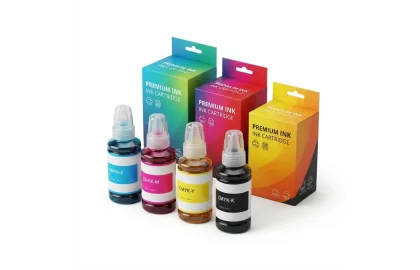
Step-by-step troubleshooting guide for unclogging dried inkjet printhead nozzles. Learn automated software cycles, manual flushing techniques,...
Understand why inkjet printers stop with "Ink Pad End of Service Life" warnings. Learn how maintenance...
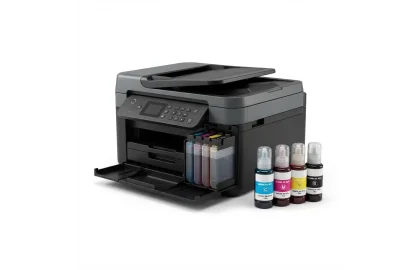
Everything businesses need to know about Epson EcoTank printers (L3250, L3150, L4260, L6270). Master EcoFit auto-stop...
Cookie Preferences